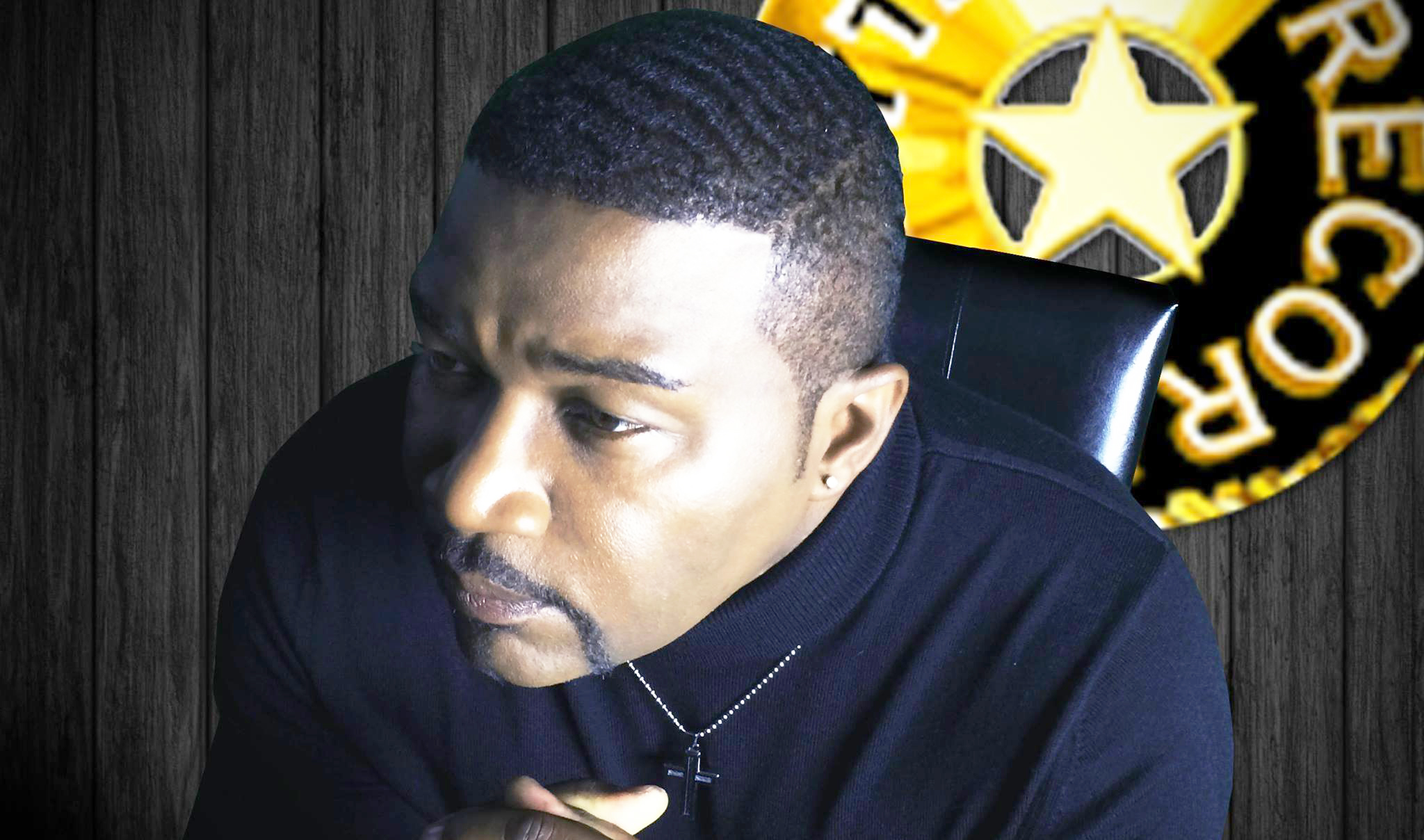
D Mack’s Biography

Singer, Songwriter, Musician, Producer, Entrepreneur, and Media Personality D’Mack tradition is rooted in the “Jackie Mittoo” influence and was mentored by the great musician for over 5 years in Toronto. The great Jackie Mittoo music extraordinaire whose contribution to Reggae music is immeasurable and notable.

Born Douglas McLeary, in Buff Bay, Portland, Jamaica, D’Mack grew up in a strict Baptist home, where he was under a firm regime of gospel music; however, his exposure to the jukebox, sound system, and radio expanded his ears and mind to different genres of music.

The transition to Canada was such a culture shock at an early age, but D’ Mack knew he had to discern his new environment to make his life blissed throughout the fridged years in Toronto.  His fascination grew stronger for music, which led him to take music lessons and learn to play the Trombone and guitar and found that he had a special kinship to the guitar at the Italian Canadian Music Center.

Growing in the business over the years, D’Mack released many singles. His first was “I’ll Always Love You,” produced by Winston Richards on the W.A.R record label, and he collaborated with Jackie Mittoo, Bull Wacky, and Sugar Minott recording “Baby Love” in New Jersey.

After withstanding, the Canadian elements for several years, he relocated to South Florida, where the sun was brighter. Since residing in Florida, D’Mack recorded with Danny Breakenridge of Upstairs Music. D’Mack was also “The Smooth One” radio Personality on 1170 WAVS radio in South Florida.

D’Mack pays momentous homage to the musical genius “Karl Pitterson,” whose arrangements are colored throughout his debut album “Odyssey,” which embodies a Reggae collection of Culture and Lovers Rock. D’Mack AKA Doug E Mack has shared the stage with the Greats, Beres Hammond, Morgan Heritage, Everton Blender, Screw Driver, to name a few.

Extending his musical abilities in the business, D’Mack decided to open his own studio in South Florida, “Rhythmax Records, “where he produced various Artists such as Glen Washington, Sasha, Terry Linen, and Jules. Additionally, the multi-faceted D’Mack is the Founder /CEO and Host of “REL” Reggae Entertainment Lifestyle TV program, a diverse syndicated show growing globally. 

D’Mack has just released a new Reggae single titled “Curfew Roadblock, “and it is anticipated that it’s going to be a summer hit, so stay tuned. 

Submitted
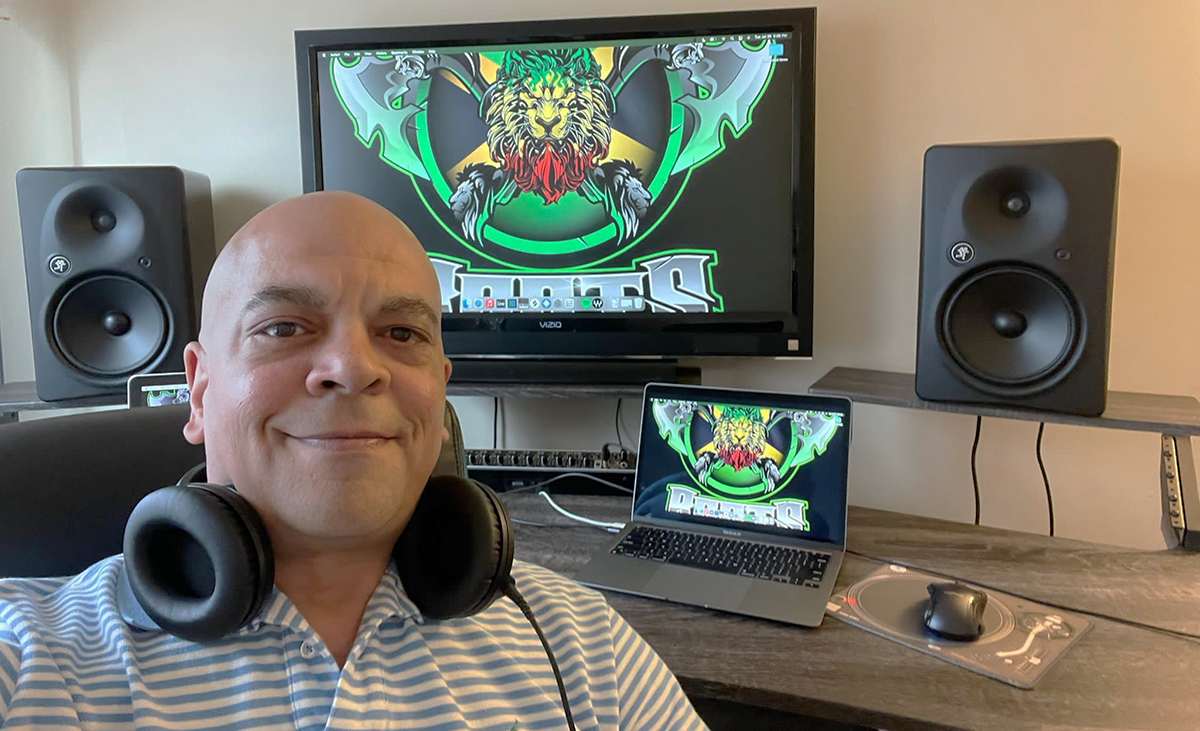
Damien Ceza’s Bio

Damien Ceza, who hails from Staten Island in New York, started his career in the music industry in 1990 with Tribal Force Sound.

During the 90s, Ceza was heavily influenced by world renowned deejays: Funkmaster Flex, Sting International, Bobby Konders and Dahved Levy. His own journey started out in a small venue on Staten Island called Consequences. There he incorporated the styles of the aforementioned selectors by blending Hip-Hop with Dancehall. As his popularity grew, he ventured over the bridge from Staten Island to Brooklyn and begun frequenting nightclubs like Club Callaloo, Club Legends, Biltmore Ballroom and Caribbean City. While observing the more established sounds at these discotheques: King Addies, Earth Ruler, Spectrum and Massive B, Ceza started to really respect and appreciate Dancehall music, culture and lifestyle. Shortly thereafter, he begun getting dub-plates done for his sound at the popular Mad Lion’s recording studio, which is also located in Brooklyn.

By 1994, he was playing at legendary clubs like Limelight, Palladium, Club U.S.A. and China Club; all this while his own popularity was on the rise in Manhattan. These were clubs that were known for having House music in the main rooms; however, they also had secondary rooms that featured Hip-Hop and Dancehall. Damien Ceza took what he learned from the Dancehall culture in Brooklyn and brought it to Manhattan. This catapulted his career and brand; resulting in him playing up to five nights a week. On some nights he was even double booked, playing at a club from 10PM to 1AM; then again from 2AM to 5AM.

In 1998 he decided to step back as he became a father to two sons. He felt that spending time with his boys was much more important than being out at a club until 6AM five nights a week. That being said, he switched up his work routine and decided to do more private parties such as weddings, Sweet 16’s, corporate events, etc. By 2003, he had three sons and a daughter to provide for. Though he continued playing music, he was not doing it as much as he did before. Alas, he started focusing on a Wall Street career and spent less time playing music.

In 2020 Damien became interested in producing. His lifelong friend, D.J. Pumpamatic, was putting out tracks and took him under his wings. He learned a lot from him about producing, engineering and mastering music. He then started his own Roots Records label in 2021 with the intent of creating Dancehall music that is clean, fun and inspiring. His productions are heavily influenced by 90’s type Riddims, big kicks and bass lines that vibrate through the listener’s body when played at clubs. His goal is to make music that will put Dance back into Dancehall. His first production is a Dancehall compilation called Midnight Run Riddim. It features various artists and was released on July 12, 2021. His second production is a Dancehall single titled Get Yuh Energy Up, performed by Asta-G. It was released on July 13.

Rufftop Rock I’s Bio (@ReggaeVibesMus1)

Garfield Thomas, who is publicly known as Rufftop Rock I, is reggae recording artist who has a rich musical history which started when he was a child.

In his childhood days Thomas resided in a small community known as Two Rivers in Roses Hill, St. Andrew, Jamaica. Like a lot of Jamaican singers before him, he started singing in church. Though he recalls always belting out songs when he was a youth, there was one particular experience that he felt was significant in him deciding, definitively, that he wanted to sing professionally.

One Sunday after returning home from service, he was in a chocolate tree on a banking looking at the river; for some inexplicable reason he began chanting a popular gospel song: “I need another touch from the Lord, to guide me on the way to go home.” As the words left his mouth, tears ran from his eyes; and that was the moment that served as a catalyst for his career in music.

Unfortunately, due to political unrest in the aforementioned community, Thomas’ family, specifically his mother and six siblings, had to relocate to Allman Hill in the tiny district of Spring Field in St. Catherine, Jamaica. This is where Garfield started to experience music outside of the church.

The area had a popular sound-system called Prince Fame that would keep regular dancehall sessions. At these gatherings young Garfield got the opportunity to perform in front of an attentive audience. He also spent a lot of time honing his craft on a smaller sound called Brimestone. With Brimestone, in addition to performing, he was allowed to select music and compete against other artists to see who had better lyrics, flow and style. These clashes were instrumental in sharpening his music skills.

Garfield, who was now being called Daddy Mutt, soon became best friends with Fiyaneer, the son of one of the sound-system owners. They began making music together, like a duo, and were constantly in the streets pursuing new opportunities. One such opportunity came in the early 90s when they met the operator of Nitty Phonic Sound. The connection with him led to them linking up with Bescenta, another talented artist whose addition to the team transformed their duo to a trio called Kill Dead Crew. By the late 90s the group started to gain traction, so much so that they had to change the name to something that was more accepted. They decided to go with New Generation. Around the same time, they got the chance to do a few shows in the U.S. and once they saw that the group had the potential to be big, they opted to change the name yet again, this time to something with more significance: Kana Stone.

Garfield, who had now switched his name to Mutt Daddy, has shared the stage with artists like Nadine Sutherland, the Marley brothers and several other top-tier reggae and dancehall artists. He has done so as an individual act as well as with the ensemble Kana Stone.

Regretfully, the men dismantled the group in 04 / 05 when Bescenta decided to leave. However, they did remain friends and continued working on their respective careers. That being said, in 2006 Rufftop entered Jamaica’s Festival Song Competition. Sadly, he did not win, but was acknowledged and awarded for his stellar performance. His final name change was made shortly before the contest.

Prior to the competition Fiyaneer had suggested that he change his name from Mutt Daddy to Rufftop. He told him this because at the time Garfield was making it known that he was not very comfortable with the name Mutt Daddy and was seeking something that better represented him. Fiyaneer went with Rufftop because Garfield was always eating a biscuit with the same name. Rufftop agreed and immediately took on the new moniker. Rock I was added when the producer he worked with during the festival competition told him that Rock I would suit him better than Rufftop. Not wanting to lose the Rufftop, he decided to use both: hence Rufftop Rock I.

The following year, in 2007, before migrating to America, Rufftop Rock I worked at the Bob Marley Birthday Celebration at Ranny Williams Center in Kingston.

Rufftop Rock I now lives in the United States and is working with one of the most respected record labels in the reggae-dancehall industry, Reggae Vibes Music. They just released his new four-track EP, titled The World Needs Love. It goes without saying that both Rufftop Rock I and the team at Reggae Vibes Music are now in full promo mode as they hope to use this project to expand his fanbase.

Minister Taf’s Biography (@Minister_Taf @reggaegospel360)

Minister Taf, which is short for Tafari, is a Jamaican born and raised reggae-gospel recording artist who now resides in the United Kingdom.

A man of humble beginnings, Taf‘s childhood, though filled with love was also dominated by poverty. He recalls times when he would go to bed without food; the roof would leak when it rained, and at one point he only had one pair of shoes, a trouser and t-shirt to wear when going out. Having survived all that, Minister Taf now creates songs that can aptly be described as motivational, hopeful, and inspiring.

Though he is now committed to music, Taf‘s first passion was always football. He had what seems like a natural God-given talent for soccer, which became evident in his adolescent years. In fact, at the age of 16 he was selected to attend a trial for Jamaica U17; and even though that trial never took place, he went on to win many football medals and trophies over the years. After arriving in the UK in 2009, he tried out for Barnet FC while they were in league 2. Regretfully he did not make the team. Looking back now, it is clear that God had other plans for his life.

It can be argued that his attachment to football was always matched by his fondness for music. Before transitioning to reggae and dancehall, the music from his home country, Taf started out rapping. He was introduced to the hip-hop genre by his brother and subsequently became a huge fan of Tupac Shakur. To fulfil their musical desires Taf would meet with his friend (Delano) and write songs. They often recorded themselves freestyling; but it was just for fun.

His musical journey got serious in 2012 after hearing the voice of God regarding pursuing music. That said, he officially started to work on his career as an artist that same year. From that point on Taf has been busy paying his dues. He has worked tirelessly over the years and is at a point now where he is indeed being used by God to speak to the masses.

King Jazzy’s Biography (@kingjazzyBee @bridgewayartist)

A king with many crowns; artist, song writer, audio and visual producer, brand ambassador, creator, visionary and entrepreneur, King Jazzy weaves his unique cultural background into everything he creates.  The coalescence of Harlem, NY, Jamaica, West Indies, and Detroit, King Jazzy not only delivers the raw soul and irresistible sound of Jamaican and American music, but he has also lived it from his youth.

Born from 3 generations of performing musicians on his father’s side and raised by an artistic-gypsy mother; Jazzy made his way from East Harlem to the streets and sounds of Miami, to the hills of Jamaica where he experienced the “sound-system culture” of the island’s music-adoring population. Stepfather to the young artist, Dicky Dread of Black Love Sound raised Jazzy in the ways of roots culture, steeping him in the deep musical traditions of the island, and instilling in him a strong sense of positivity, perseverance, and artistry – keeping him afloat even through the rough waters of 3rd world living.

Jazzy got his first taste of being a working musician touring with reggae legend Sugar Minot in 2007. Besides collaborating with Paradime, Denaun Porter of D12, dancehall sensation, Ding Dong and DJ Ted Smooth, sharing the stage with the likes of Buju Banton, Sizzla, Luciano, Capleton, Junior Reed and Juice World, Jazzy’s artistic career includes, running recording studios in Michigan, Jamaica, and New York City; creating 2 cannabis dispensary brands in Michigan, and running his production company, Electric Sticky.

A true hustler, Jazzy has been a relentless innovator and performer of his original music. His sound is a spicy blend of depth and swagger that naturally permeates his craft. His music reveals an artist of the great American song-crafting tradition as well as a tough, electronic-edged hip-hop infused Caribbean vibes. Jazzy touches on Hip Hop, R&B, Reggae, Dancehall, Electronic and Afro-pop.

Few artists can authentically hit such a spectrum of genres. King Jazzy draws outside the lines but what a colorful picture he presents! Just as explosive rocking’ over beats provided by a DJ as he is fronting a full live band, the King Jazzy stage show consistently leaves audiences energized from dancing all night…. as King Jazzy puts his mission – “Shake the world awake!”

King Jazzy brings us a fresh twist to trap songs with his latest record, Trap Betty Baby.  This song is on a new path with what some are calling trap love songs. Trap Betty Baby mixes romance with street life and Jazzy brings the two together like none other. The official video is shot in Jamaica featuring some of the most popular dancers the island has to offer and is filled with beautiful scenery and even more beautiful women. Laid back, smooth and sexy, this song is making waves on both hip hop and reggae platforms and is on its way to being the next strip club anthem.

Submitted

Sheldon Gava’s Bio

Sheldon Gava is a Rastafarian recording artist, poet and budding actor based in South Florida (U.S.A.).

He was born in Old Harbor Bay, St. Catherine, Jamaica, but grew up in Brooklyn, New York with his parents; except for Summer breaks, which were spent in Toronto, Ontario.

Gava’s first interest in the entertainment industry came when he was in Middle School, where he studied drama. It was there that he auditioned to play the leading role of Clinton for Spike Lee’s film Crooklyn. Although his acting skills were good enough to get him to the finals, he was eventually cut because of his age. Not being one to give up, he continued to work on his stagecraft and was later accepted at Fiorello H. LaGuardia High School of Music & Art and Performing Arts, an institution that has schooled the likes of Alicia Keys. Unfortunately, his mother insisted that he attended Brooklyn Tech instead, one of the top academic high schools in the nation. Sadly, Sheldon never really settled into Brooklyn Tech, and as such he lost interest in acting and ended up quitting the drama club.

In addition to being drawn to the stage, Sheldon Gava was also very passionate about writing. He explains his love for penning words as follows: “Migrating from Jamaica to the States, at the beginning of Elementary School other students could not understand when I spoke heavy patois. I was ridiculed for my accent which led to a lot of fighting and suspensions even though academically I was a gifted student. In grade 4 I won a New York Citywide Martin Luther King Jr Day essay contest which I read for an audience of hundreds of other students and teachers from schools all across the city. I found writing to be the one single way that everyone could understand what I had to say, so I developed a passion for writing.”

Throughout his teenage years he would do freelance writing for magazines offering a few dollars for a certain word count, poetry style, or subject matter. The pay was not great compared to all the rights he gave away, but those freelance submissions taught him a lot about different poetry styles. Lessons that would serve him well later in life.

By the early 2000s he was a published poet with a growing fan base, who was frequenting open mic poetry recitals. At one such recital he met a group of Roots Dub musicians who invited him to their studio to record a few spoken word tracks. While working with them, gradually poems transitioned to lyrics, and just like that he added songwriter and recording artist to his title.

Sheldon Gava, the artist, would later record at Jamhill Studios in Lauderhill, Florida, a place that had several Grammy plaques on the wall; ornamental tablets achieved from working with various reggae legends in the past. Most of Gava’s early studio works however, were done at 56 Real Productions. This is due in part to the fact that they had an in-house producer / engineer who was from Old Harbor. Because Sheldon is also an Old Harbor man the two spent hours in the studio every day working on his lyrical delivery and overall sound.

Among his discography is a ten-track album titled Natty De Ras, which was released in October, 2020 on his own Gava Music LLC label. The project received mixed reviews, with standout track Ras Tafari earning international critical acclaim.

Fast-forward to 2021 and a more knowledgeable, focused Sheldon Gava is again sharing a new project. His latest offering is Weather Change, a seven-track EP that was officially published on April 30th, 2021. Gava and his team are now in full promo mode as they are committed to exposing this new record to a wider audience.

Though he is now known and respected as a recording artist, Sheldon remains active as a poet and has even resumed acting. In recent years he has been committed to playing the role of daddy to his three kids: Nyah, Sara, and Malakai. His dedication to his Rastafarian faith is always on all full display in every area of his life.

WRITTEN BY MARIA JACKSON

IZI ION’s Biography

For as long as he can remember, music and Rastafari have been part of Izi Ion‘s life. It was not until the late 1980s however, that he recorded his first song and in the next decade became a committed disciple of Rastafari.

Izi Ion was born Vollin Garth Headley in the Flour Hill district, a small, family-friendly community in St. James, Jamaica. It was there that he learned the importance of farming and self-sustainment; something he actively partakes in to this day. He considers farming an essential part of life and explains it like this: “my leisure time, I’m in the farm tilling the soil, planting food and making herbal medicine. Building up the structure and living a healthy lifestyle.” In addition to agriculture, Izi is also a fashion designer who specializes in indigenous clothing and jewelry.

His musical career started in 1989 under the name Chiney Eye, a moniker he was called because of the shape of his eyes. His initial songs were Talk & Run and Accident.

By the mid-1990s, there was a cultural shift in Jamaican dancehall with the Rastafarian influence returning to the forefront; this is thanks to artists like Garnet Silk, Tony Rebel and Everton Blender. It was during that time that Vollin Garth Headley aka Chiney Eye evolved into Iziniga. His songs took on a distinct Afrocentric flavor, which stood out when they were played on the radio. Because he was raised on the nourishing music of reggae legends Bob Marley, Burning Spear, Jimmy Cliff, Dennis Brown, Gregory Isaacs and Culture, he somehow managed to create music that had a similar impact on the listener.

As a live act, Izi Ion toured The Netherlands and Belgium in the mid-nineties and has performed at major events such as Reggae Sumfest and Rebel Salute.

He kicked off 2021 with the release of So Many Sounds, a song produced by Kenneth Thompson for the KENERGi Music Label. It is his first song for the emerging music imprint, which is based in Florida (U.S.A). Like most of his previous releases, So Many Sounds is driven by his spiritual beliefs and is filled with relevant and timely Rastafarian teachings.

When asked what he would like people to take away from his music, Izi Ion said the following: “My main mission is to endorse the message of Rastafari. That is what I live for.”

UPDATED BY MARIA JACKSON