New Music from Protoje – “Blood Money” (@Protoje)

protoje

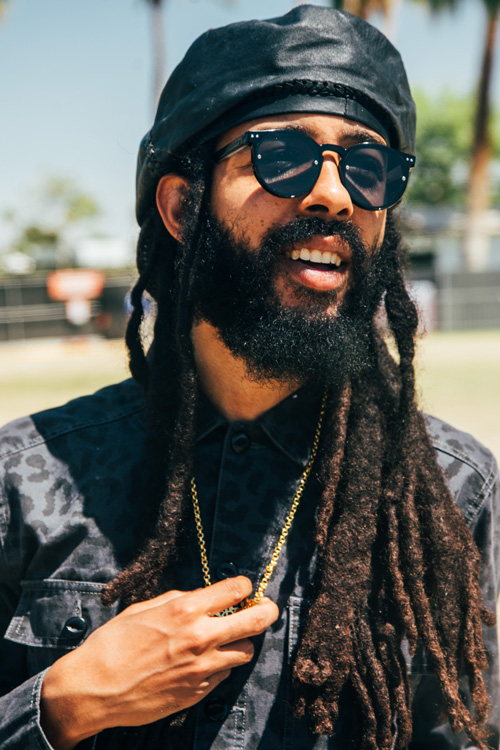
Reggae artist Protoje rallies for justice in his homeland (Jamaica) in “Blood Money.” In his new politically-charged single, he delivers an honest call to action while addressing some of the socio-economic inequalities that exist in the country. In this melodic flow, Protoje describes the systematic oppression and the ways in which many of his people struggle. “Blood money run the nation,” he repeats in a sobering chorus that nods to society’s corruption. Click here to listen.

New Release from Nesbeth “New Gangster” (@NesbethReggae)

nesbeth

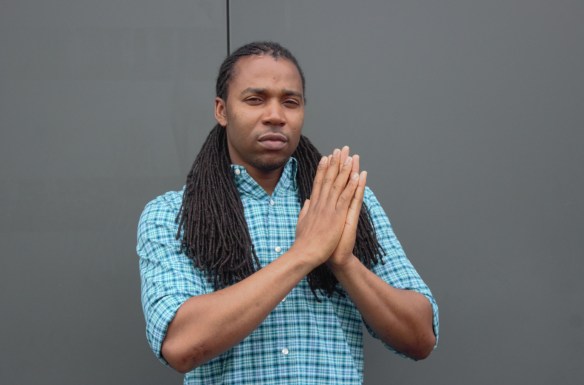
Nesbeth’s latest release, on DJ Frass’ Street Light Riddim, seeks to redefine the concept of gangster for a new generation. On the track, Nesbeth sketches out a vision of what could be possible if people made up their mind to bring about change. Some have interpreted his lyrics as a swipe at incarcerated Dancehall artist Vybz Kartel, but his message of aspiring to be “rich and up” sounds more positive than provocative.

With Jamaica experiencing elevated crime rates at the start of the new year, this tune is right on time. Click here or on the image above to listen.

Peppery Releases Long Awaited Battlefield Album (@pepperyworld)

peppery-press-photo-1Unlike the widespread propaganda on governmental warfare that’s usually reported in traditional media, news about Peppery’s Battlefield album have been circulating for months via the new age social media, whatsapp groups and emails. For those who were anticipating it, the wait is over. The album is now available to download on all major platforms, thanks to record label Ambiel Music.
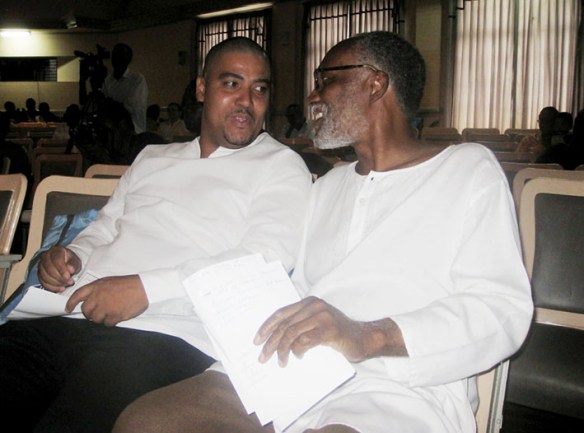
The Title Track Battlefield has been receiving airplay on a number of radio stations worldwide since it was first emailed to various radio presenters and DJs in November of 2016. Naturally, a promo pack of the Album was also sent out before the official release date and a successful launch was held in Birmingham, UK where promotional CDs were given to some of the patrons attended.

Peppery is originally from Trelawny, Jamaica but has been living in Manchester, UK since the latter part of 2009. Although he is known for releasing a number of dancehall songs, this new album steers away from this sub-genre of reggae and instead pays homage to its roots. “It is a roots reggae based record but my involvement in various genres of music would not allow me at this time to do a complete reggae album,” explained Peppery.

This is an album that touches many aspects of love and life – the album that’s missing in your music collection, if it’s not already in there. Peppery is an artist who prides himself on not using profanity in his lyrics so needless to say, this album is free from such term.

Support Peppery by purchasing his music, also make sure that you take time to visit his brand new bandcamp page here: http://peppery.bandcamp.com/album/battlefield. Or alternatively you can support the works by downloading mp3’s of his new album via the following link: https://itunes.apple.com/gb/album/battlefield/id1181804159?ls=1&app=itunes

Reggae Open University: Addressing the Culture and Business of Reggae Music (@ReggaeMonth)

david-brown-left-and-herbie-miller

David Brown (left) and Herbie Miller

The Reggae Open University which was introduced in 2013 continues to be a highlight of Reggae Month. It features panel discussions that provide participants with a unique opportunity to explore topics related to Reggae culture and industry. The sessions are led by music educators, artists, music industry professionals including artists, producers, media, promoters and government officials.

Reggae Open University sessions will take place at the Edna Manley College of the Visual and Performing every Thursday and Tuesday February 21st and 28th at UTECH. Reggae Open University opened on Thursday, Feb 2 with the topic “Preserving the Music.” Panelists included Herbie Miller – Curator of Jamaica Music Museum, Joan Webley – Attorney and Board Member of JaRIA, Jahyudah Barrett – Attorney at Law and Director at Flames Production, David Brown – African Caribbean Institute of Jamaica, lead coordinator of UNESCO Reggae designation application and Mr. Gussie Clarke – Publisher/ Managing Director of Anchor, Board Member of JACAP.

Reggae Month was officially declared on January 9th 2008 by the then Governor General of Jamaica. This was done to highlight and celebrate the impact of the musical genre on the country’s social, cultural and economic development.

Spirit Flower by Annette Vogel (Artwork)

flower-spirit-by-annette-vogel

FLOWER SPIRIT: The cost for this artwork is 175 Euro + the cost for shipping and handling. The dimensions are 50cm X 60cm. We will ship to anywhere in the world. Payment can be made via PayPal by clicking here.

New Hip-hop Release: Talib Kweli & Styles P – Last Ones (@TalibKweli @therealstylesp)

talib-styles-p-tour

Hip-hop lovers have something to be excited about, as two living legends – Talib Kweli and Styles P (of The Lox) – have collaborated on a track and seem to be working on a joint album. On February 1st, Kweli blasted out the track called “Last Ones,” produced Antoine “Amadeus” Thompson.

In the blast he also noted that an album, entitled The Seven, is coming. Both men are currently doing The Seven tour along with K’Valentine. Check out Last Ones by clicking on the image above or here. 

In Honor of Black History Month we are highlighting Patrice Lumumba – Civil Servant, Prime Minister, Activist (1925–1961)

patrice-lumumba-1925-1961-first-prime-everettPatrice Lumumba was the first prime minister of the Democratic Republic of Congo, calling for national unity and overall African independence.

Synopsis
Born on July 2, 1925, in Onalua, Belgian Congo (now the Democratic Republic of the Congo), Patrice Lumumba was a writer and civic organizer before co-founding the Congolese National Movement. He became the first prime minister of the Democratic Republic of Congo with the country’s independence; yet massive unrest followed with other leaders’ uprisings, along with U.S. and Belgian involvement. Lumumba was killed on January 17, 1961.

Background and Early Career
Future Prime Minister Patrice Émery Lumumba was born Élias Okit’Asombo on July 2, 1925, in the Kasai province of Belgian Congo (now the Democratic Republic of the Congo), in the village of Onalua. He was able to hone his love for literature and learning while attending missionary school and borrowing books to read.

After some travels within his country and acquiring different languages, Lumumba became a postal service clerk during the mid-1940s in what is now Kinshasa, later working as an accountant in another region. He also wrote poems and essays for publication, earning acclaim, and became increasingly involved in political movements, keeping in mind the oppression endured by Africans from the Belgian colonial system.

After having established himself as a leader in organizing unions, Lumumba co-established the Congolese National Movement in 1958. He called for countrywide unity, bringing together different ethnic backgrounds, and freedom from colonial atrocities, with major links to Pan-Africanist movements as well.

Becomes Prime Minister
On June 30, 1960, the Democratic Republic of Congo officially took its independence from Belgium, and, at 35 years old, Lumumba became the country’s first prime minister. However, nationwide disarray was to follow with various leaders vying for power, including a Belgian-fortified secession of the region of Katanga, headed by Moise Tshombe.

Lumumba called for United Nations aid to no avail and turned to the Soviet Union for military intervention, with the Congo thus caught in Cold War politics and Lumumba perceived by the U.S. as having communist ties. Years later it was revealed that a C.I.A. operative in the field during the Eisenhower administration was instructed to poison Lumumba; the agent recounted in a 2008 New York Times article he secretly chose not to do so, though some accounts clash with this.

Death and Legacy
With the country falling under the control of military leader Joseph Mobutu, Lumumba was captured and, though at one point escaping, was eventually taken to Katanga, where he was beaten and killed on January 17, 1961. His death ignited international outrage and years later continues to provoke dialogue on foreign investment in creating the turmoil seen after his rise to power and African independence in general. Congo soon endured the decades-long, highly-damaging reign of Joseph Mobutu, who would become known as Mobutu Sésé Seko.

Lumumba, his story and vision have been chronicled in a number of literary works and films, including the 2001 book The Assassination of Lumumba, by Ludo De Whitte, and the Raoul Peck movie released the same year, Lumumba. Peck had also directed a documentary on the leader.

Source: Biography.com