
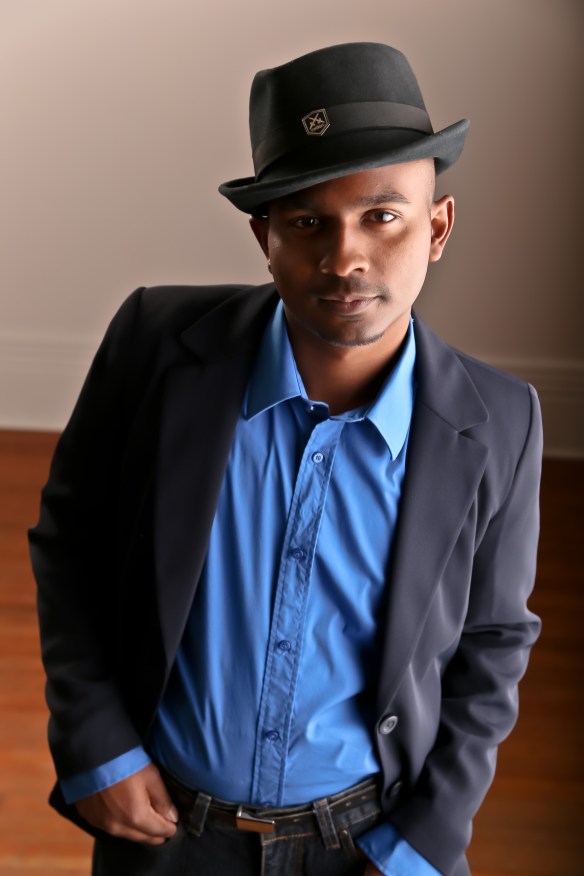
 Growing up in war-torn Sri Lanka motivated Franklin Fernando to go to battle. But instead of taking up arms, he armed himself with a guitar, and songs that speak of a century-old struggle.
Born in Winnipeg, Fernando and his family relocated to Sri Lanka amidst the nation’s longstanding civil war between two ethnic groups – the Sinhalese (majority) and Tamil (minority) people. The son of a Sinhalese tradesman who provided sanctuary for his Tamil wife and her family, a young Fernando found himself struggling to find his identity during formative teen years.
After returning to Winnipeg in 2007, with tensions still rising in Sri Lanka, Fernando didn’t know what to do about the empathy he felt for his fellow Tamils. “I was living an illusion. I didn’t think I could make a difference.”
It wasn’t until graduating high school and taking a job at a worker-owned co-op café that Fernando’s perspective was monumentally impacted. Enlightenment came in the form of an article written by Sri Lankan journalist Lasantha Wickrematunge about ongoing conflicts between the Sinhalese and Tamils. “In that moment I realized these are the two groups that make up my heritage – these are my people, this is my homeland,” he says emphatically. “Reading that story simply changed my life.”
Fernando was compelled to take action. His weapon would become a Fender Stratocaster; his ammunition, a catalogue of songs that promoted peace, empowerment, and prosperity. His army? An ever-expanding legion of followers who dig reggae music…
Franklin Fernando first met Rasta percussionist Martin Valach in 2010, at a late-night drum jam on Canada Day. A long-time veteran of Winnipeg’s reggae circle, Valach shared Fernando’s passion for making music with a message. “Martin really shaped me and the music I wanted to make,” says Fernando. “He showed me the power of reggae.”
Valach became Fernando’s musical muse and co-founder of reggae outfit RasTamils. The band name combines two words representative of two cultures – ‘Ras’ (short for Rastafarian) and ‘Tamils’ (the name of Sri Lanka’s minority people). Putting these two words together reflects the hope that Franklin Fernando and his bandmates share of cultures coming together around the world.
Rounding out RasTamils are Christian DeVoin (bass), J.R. Hill (lead guitar), Andy Castello (keyboards), Matthew Walden (trumpet) and Janice Finlay (saxophone/ flute). Together, they create a beautifully layered and tasteful take on the classic reggae rhythms of Dennis Brown, Gregory Isaacs, Sly & Robbie, and Bob Marley, combined with popular pop reggae sounds of Busy Signal and Christopher Martin, and simple ‘80s rock. Lead vocalist Fernando has a style reminiscent of Qawwali singers Nasrat Fateh Ali Khan, Rahat Fateh Ali Khan, and home-inspired Gunadasa Kapuge.
The culmination of their sonic concoction can be heard on the band’s self- titled 2011 EP – a collection of seven dance- inducing tracks laced with RasTamils’ ever-potent, politically-charged lyrics. The album received positive attention from the CBC, whose program Manitoba Scene chose the track Friends as one of the Top 5 of 2012.
Their second album, It’s a Dream, was released in September 2015. It contains 11 soulful reggae anthems, in solidarity with the Tamil people of Sri Lanka. “We’re trying to open people’s eyes to what’s happening in the world,” says Fernando. “Music is known as the gateway to the soul, and the gateway to the heart. We also believe that, most importantly, music is the gateway to the mind.” ! Fernando has a unique take on success that is best summarized in the words of a quote he finds inspirational, by Booker T. Washington: “Success is to be measured not so much by the position that one has reached in life as by the obstacles which he has overcome.”
From the stage, RasTamils are as inspiring as they are informative. “It’s really just friends coming together to play,” Fernando says. It’s this ease that contributes to the sense of community that extends from the stage and into the audience, whether it’s a crowd of dozens at a local club or thousands from an outdoor stage. It’s this sense of community that drives home their message.
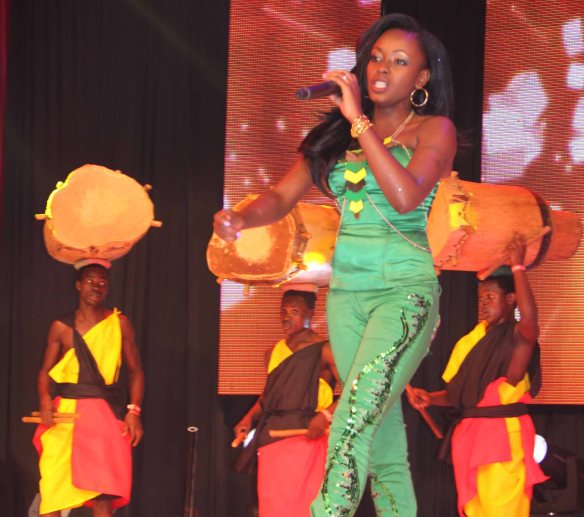
 For those who’ve been waiting for Rasta consciousness to mount a resurgence in contemporary reggae, Jah9 is a figure of revelation and deliverance.
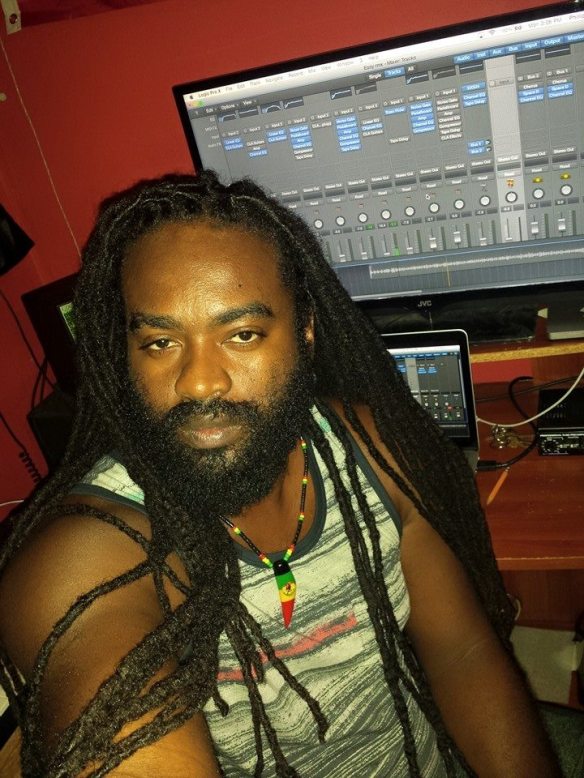
 “Listen to that sound and allow yourself to be lifted.” says Aumuna about the music of the group The PathHeights. Akosua Aset is not only the other half of the band, but also Aumuna’s wife. It is thus a unique constellation that The PathHeights present to the world – God and Goddess, King Alpha and Queen Omega, Yin and Yang, Mars and Venus, an impressive infinite combination of love and talent that awaits to be discovered.
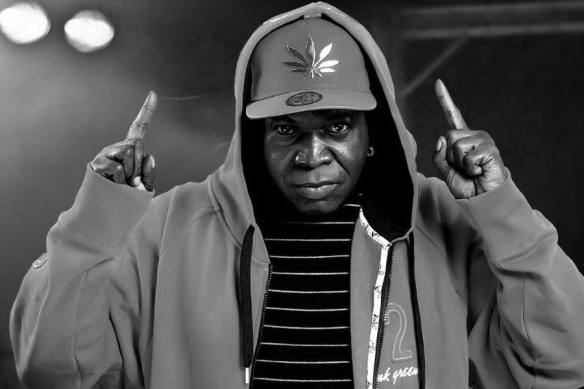 Levy was born in Clarendon, Jamaica. He formed a band called the Mighty Multitude, with his cousin, Everton Dacres; the pair released “My Black Girl” in 1977. Levy established his solo career the next year with “A Long Time Since We Don’t Have No Love”; though the single was a failure, the fourteen-year-old was a popular performer at Jamaican dancehalls. In an August 2014 interview with Midnight Raver, record producer Delroy Wright revealed that it was his brother Hyman Wright who first met Barrington Levy in the mid-1970s through Wade “Trinity” Brammer. According to Delroy Wright, Hyman Wright recorded a host of tracks with Barrington Levy prior to introducing him to Henry “Junjo” Lawes. These tracks would eventually appear on the album Bounty Hunter, which was released on the Jah Life record label. Both record producers recorded several singles with the Roots Radics, including “Al Yah We Deh”, “Looking My Love”, “Englishman”, “Skylarking”, “Wedding Ring Aside” and “Collie Weed”, all of which became hits and established Levy’s career. Levy’s next few singles were similarly successful, including “Shine Eye Girl”, “Wicked Intention”, “Jumpy Girl”, “Disco Music”, “Reggae Music”, “Never Tear My Love Apart”, “Jah”, “You Made Me So Happy” and “When You’re Young and in Love”. Levy then recorded several duets with Toyan, Jah Thomas and Trinity, and appeared at Reggae Sunsplash in 1980 and 1981. Although albums were not terribly important in Jamaica at the time, Levy released four albums before 1980: Shaolin Temple, Bounty Hunter, Shine Eye Gal (United Kingdom) and Englishman, a critically acclaimed record. His success led to many earlier studio and sound system performances being reissued without his consent, releases he described as “joke business”.
 At a very early age growing up in the heart of Kingston, Jamaica, Roger ‘Mitch’ Mitchell, the first of three children started showing signs of artistic talent. whether he was drawing some comic book heroes or real life images or singing at church with the choir, it was clear from then where his path would be in life. His birthday gift at the age of 8 was an acoustic guitar and having a music Loving father (Clervis Mitchell) was even better. He taught him the basics and that’s all he needed because ‘Mitch’ had an ear for music so he didn’t need to know the name of chords to play the guitar, you see he has the ability play what’s in his head without knowledge of what keys to touch.
